

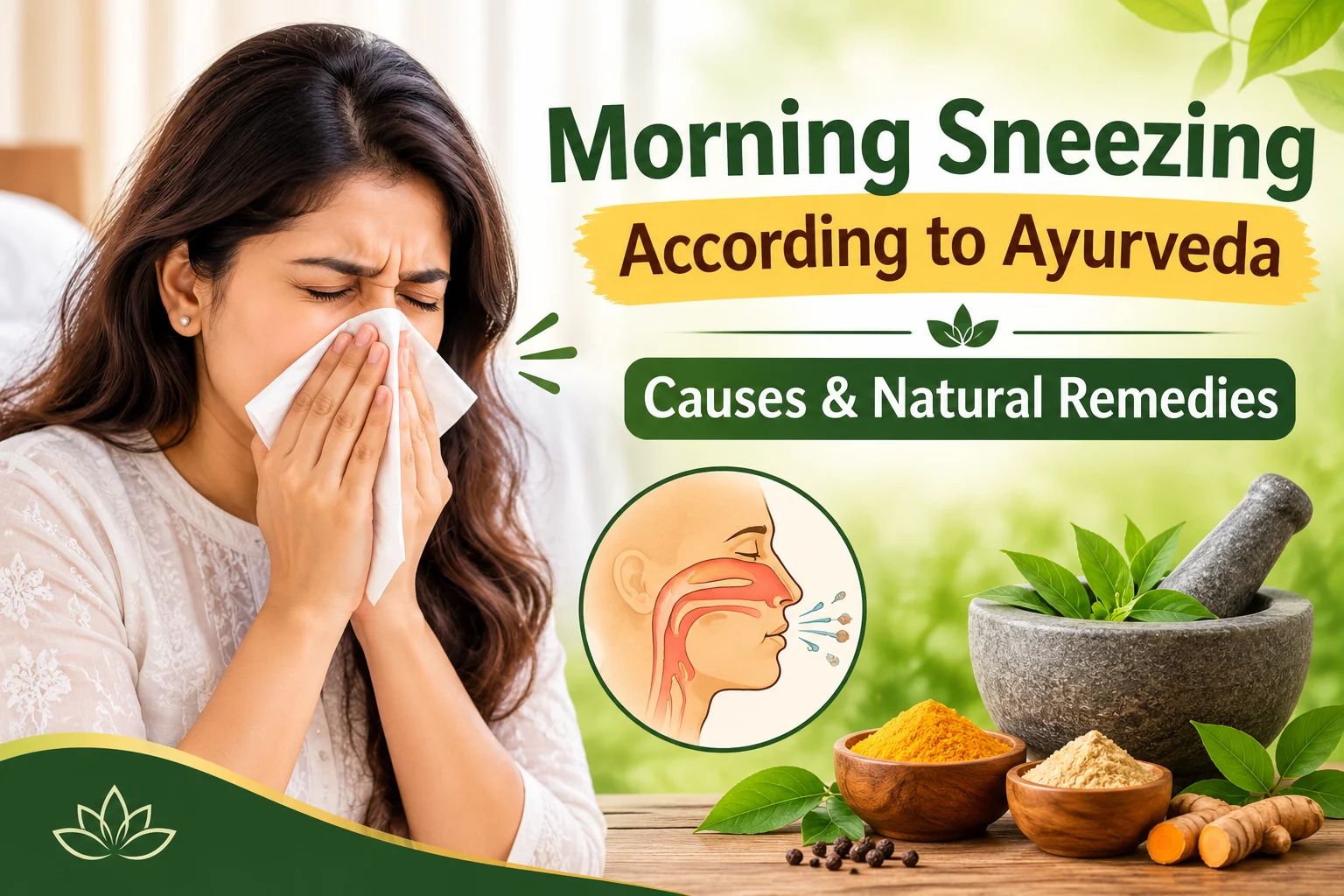
Morning Sneezing According to Ayurveda: Causes, Lakshana, Samprapti and Chikitsa
Repeated sneezing immediately after waking up, watery nasal discharge, nasal itching, and nasal congestion are common symptoms experienced by many people. According to Ayurveda, these symptoms may be correlated with Pratishyaya (प्रतिश्याय), a condition associated with disorders of the nasal passages.
From a modern medical perspective, these symptoms may also indicate Allergic Rhinitis, particularly when they occur regularly in the morning.
Ayurveda explains this condition through the imbalance of Doshas, particularly Kapha and Vata. Understanding its causes, symptoms, pathogenesis, and appropriate management can help guide an individualized treatment approach.
1. Ayurvedic Understanding and Pathogenesis (Samprapti)
According to Ayurveda, morning sneezing may be associated with the aggravation of Kapha and Vata Dosha, which can affect the normal functioning of the nasal passages and respiratory channels.
The early morning period is traditionally considered Kapha-dominant (Kapha Kala). Therefore, individuals with increased Kapha tendencies may experience more prominent nasal symptoms during this time.
The involvement of Doshas can be understood as follows:
Kapha Dosha:
- Increased mucus production.
- Nasal congestion and blockage.
- Heaviness in the head.
- Excessive nasal discharge.
Vata Dosha:
- Repeated episodes of sneezing.
- Nasal dryness.
- Increased sensitivity of the nasal passages.
- Variable nasal discharge.
Srotas Involvement:
The Pranavaha Srotas and Nasavaha Srotas may be considered relevant in understanding respiratory and nasal symptoms from an Ayurvedic perspective.
The actual Samprapti and Dosha involvement should be determined through individual clinical assessment.
2. Clinical Features (Lakshana)
Morning sneezing may present with several nasal and respiratory symptoms. In Ayurveda, these clinical manifestations can be correlated with the following terms:
| Clinical Symptoms | Ayurvedic Correlation |
|---|---|
| Repeated sneezing | Kshavathu |
| Watery nasal discharge | Nasasrava |
| Nasal congestion | Nasa Avarodha |
| Nasal itching | Kandu |
| Heaviness of the head | Shirah Gaurava |
| Reduced sense of smell | Gandha Agrahana |
These symptoms help in understanding the clinical presentation. However, they do not independently establish a particular Dosha or disease subtype.
3. Ayurvedic Differential Diagnosis
Based on the predominance of Doshas and associated clinical features, different types of Pratishyaya may be considered.
1. Vataja Pratishyaya
Commonly associated with:
- Repeated sneezing.
- Nasal dryness.
- Variable nasal discharge.
- Increased nasal sensitivity.
2. Kaphaja Pratishyaya
Commonly associated with:
- Excessive nasal mucus.
- Thick nasal discharge.
- Nasal congestion.
- Heaviness in the head.
3. Pittaja Pratishyaya
May present with:
- Burning sensation in the nasal passages.
- Nasal irritation.
- Inflammatory symptoms.
- Sometimes yellowish nasal discharge.
4. Raktaja Pratishyaya
May involve nasal bleeding along with other nasal symptoms.
Proper differentiation requires clinical examination and consideration of the patient’s overall health condition.
4. Ayurvedic Treatment (Chikitsa)
Ayurvedic management of Pratishyaya focuses on identifying causative factors, balancing aggravated Doshas, and improving the functioning of the affected channels.
Treatment should be individualized according to the patient’s Prakriti, Dosha involvement, disease stage, age, and clinical condition.
A. Nidana Parivarjana (Avoidance of Causative Factors)
Nidana Parivarjana is an important principle of Ayurvedic treatment. It involves identifying and avoiding factors that may trigger or aggravate symptoms.
Common aggravating factors include:
- Exposure to dust and dust mites.
- Cold air and sudden temperature changes.
- Smoke and strong perfumes.
- Allergens present in pillows, mattresses, and bedding.
- Excessive exposure to air conditioning.
- Individual environmental allergy triggers.
Reducing exposure to these factors may help minimize recurrent symptoms.
B. Shamana Chikitsa (Ayurvedic Medicines)
Certain Ayurvedic formulations are traditionally considered by Ayurvedic physicians for selected respiratory and allergic manifestations.
| Ayurvedic Medicine | Traditional Therapeutic Use |
|---|---|
| Haridra | Traditionally used in Kapha-related and inflammatory conditions |
| Guduchi | Traditionally used in inflammatory conditions |
| Sitopaladi Churna | Traditionally used for selected respiratory complaints |
| Haridra Khanda | Traditionally used for allergic manifestations |
| Trikatu Churna | Traditionally used for Deepana and Pachana purposes |
The selection, dosage, and duration of these medicines must be determined by a qualified Ayurvedic physician.
These traditional formulations should not be considered proven substitutes for evidence-based allergic rhinitis treatment. Patients should also discuss potential interactions and contraindications with their healthcare provider.
C. Panchakarma Chikitsa
Selected Panchakarma procedures may be considered in appropriate patients after a detailed clinical assessment.
Commonly discussed procedures include:
1. Pratimarsha Nasya: A traditionally described nasal administration procedure that may be considered in selected cases.
2. Anu Taila Nasya: A classical Ayurvedic Nasya formulation used according to specific clinical indications.
3. Shirovirechana: A classical procedure described for selected conditions involving the head and nasal passages.
4. Virechana: A therapeutic purification procedure that may be considered in selected patients based on individual assessment.
The suitability of these procedures depends on the patient’s health status, disease condition, and classical indications. Nasya and other Panchakarma procedures should only be performed under qualified professional supervision after screening for contraindications.
5. Daily Lifestyle Management and Prevention
Along with appropriate treatment, certain lifestyle modifications may help reduce exposure to common allergens and manage morning sneezing.
Recommended practices include:
- Maintain a regular sleeping and waking schedule.
- Keep the bedroom clean and dust-free.
- Wash bedsheets and pillow covers regularly.
- Reduce dust accumulation in mattresses and bedding.
- Avoid direct exposure to cold air immediately after waking.
- Identify and avoid individual allergy triggers.
- Consider using a saline nasal spray when appropriate.
- Maintain a clean and comfortable sleeping environment.
These simple measures may help reduce contact with common environmental allergens.
6. Modern Clinical Correlation: Allergic Rhinitis
From the perspective of modern medicine, repeated sneezing in the morning is commonly associated with Allergic Rhinitis.
Allergic Rhinitis occurs when the immune system reacts to allergens present in the environment.
Common symptoms include:
- Repeated sneezing, particularly after waking up.
- Watery nasal discharge.
- Itching inside the nose.
- Itching or watering of the eyes.
- Nasal congestion or blockage.
- Irritation of the nasal passages.
Why Does Morning Sneezing Occur?
Dust mites are common indoor allergens that can be present in mattresses, pillows, carpets, and bedding. Prolonged exposure during sleep may contribute to sneezing and other allergic symptoms after waking up.
Other possible triggers include:
- Household dust.
- Pollen.
- Pet dander.
- Mould spores.
- Cold air and environmental changes.
Persistent or severe symptoms may require medical evaluation and allergy assessment. Evidence-based treatment options may include antihistamines and intranasal corticosteroids, depending on the patient’s condition and medical advice.
If symptoms are persistent, interfere with sleep, or are accompanied by breathing difficulties, consult a qualified healthcare professional.
7. Important Classical Ayurvedic References
The following classical Ayurvedic texts contain descriptions of Pratishyaya and related nasal disorders:
- Charaka Samhita – Chikitsa Sthana, Pratishyaya Chikitsa.
- Sushruta Samhita – Uttara Tantra, Pratishyaya Pratishedha.
- Ashtanga Hridaya – Uttara Sthana, Nasaroga Chikitsa.
These classical texts provide the foundation for understanding Ayurvedic concepts related to nasal disorders, Dosha involvement, and treatment principles.
Morning sneezing, nasal itching, watery discharge, and congestion may be understood in Ayurveda through the concept of Pratishyaya, with possible involvement of Kapha and Vata Dosha.
The early morning Kapha-dominant period, environmental allergens, and individual susceptibility may all contribute to the appearance of symptoms.
Ayurvedic management focuses on Nidana Parivarjana, individualized Shamana Chikitsa, appropriate lifestyle modifications, and selected Panchakarma procedures under professional supervision.
However, persistent morning sneezing may also indicate Allergic Rhinitis and should be evaluated appropriately. An individualized treatment plan combining proper diagnosis, trigger avoidance, and suitable medical care can help manage recurring symptoms.
Medical Disclaimer: This article is intended for educational purposes only. It does not replace professional medical diagnosis or treatment. Consult a qualified Ayurvedic physician or healthcare professional before starting any medication or Panchakarma procedure.
